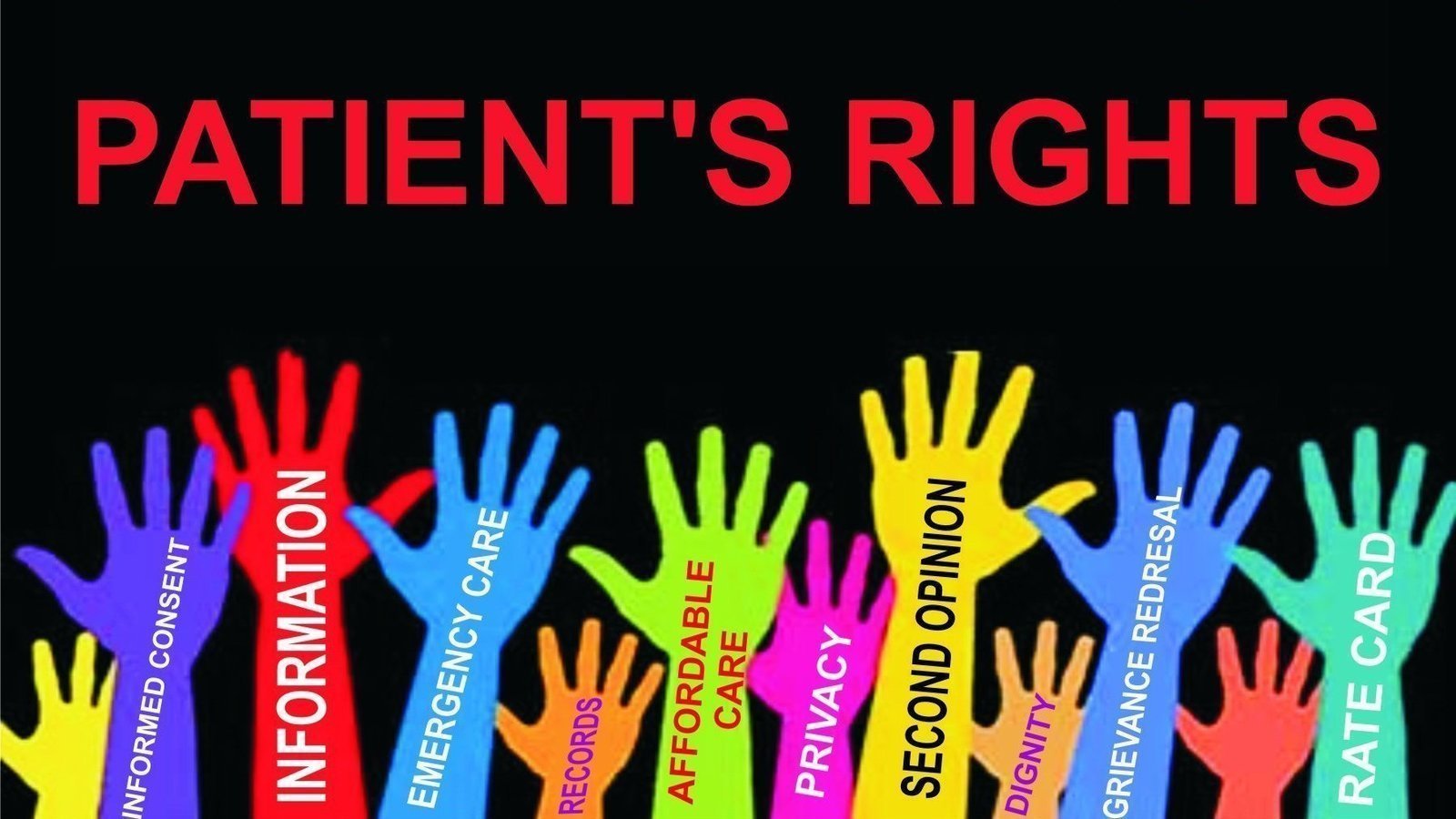
PATIENTS’ AND FAMILY’ RIGHTS IN CHUB
Right to Health Care Access & Preventive Measures
You have the right to a proper service care in order to prevent illness.
You have the right of access to health services and treatments that meet high safety standards without any kind of discrimination.
You therefore have the right to be prevented from harm that may be caused by the poor services or defective equipment, medical errors
- Right to Information
All information related to your health should be given to you and/or a family member or a next of kin of your choice.
You have the full right to receive care and information in a language you can understand the best.
- Right to Consent and free choice
You have the right to detailed information that might enable you to actively participate in the decisions regarding your health, care, treatment and medication; this information is a prerequisite for any procedure, treatment or participation in scientific research.
- Right to Privacy and Confidentiality
You have the right to be consulted in a private space free from being seen or overheard by others.
You have the right that all information about your medical condition must be kept confidential within the limits of the law.
- Right to Avoid Unnecessary Suffering and Pain
You have the right to be prevented from unnecessary much suffering and pain as possible, in each phase of your illness.
- Right to Complain
You have the right to complain about any aspect of your care and treatment that did not go well without fear of recrimination
You have the right to receive prompt action on your complaints and a report back on actions taken.
For any challenges please call CHUB Customer care on 2030 (FREE LINE) FOR HELP.
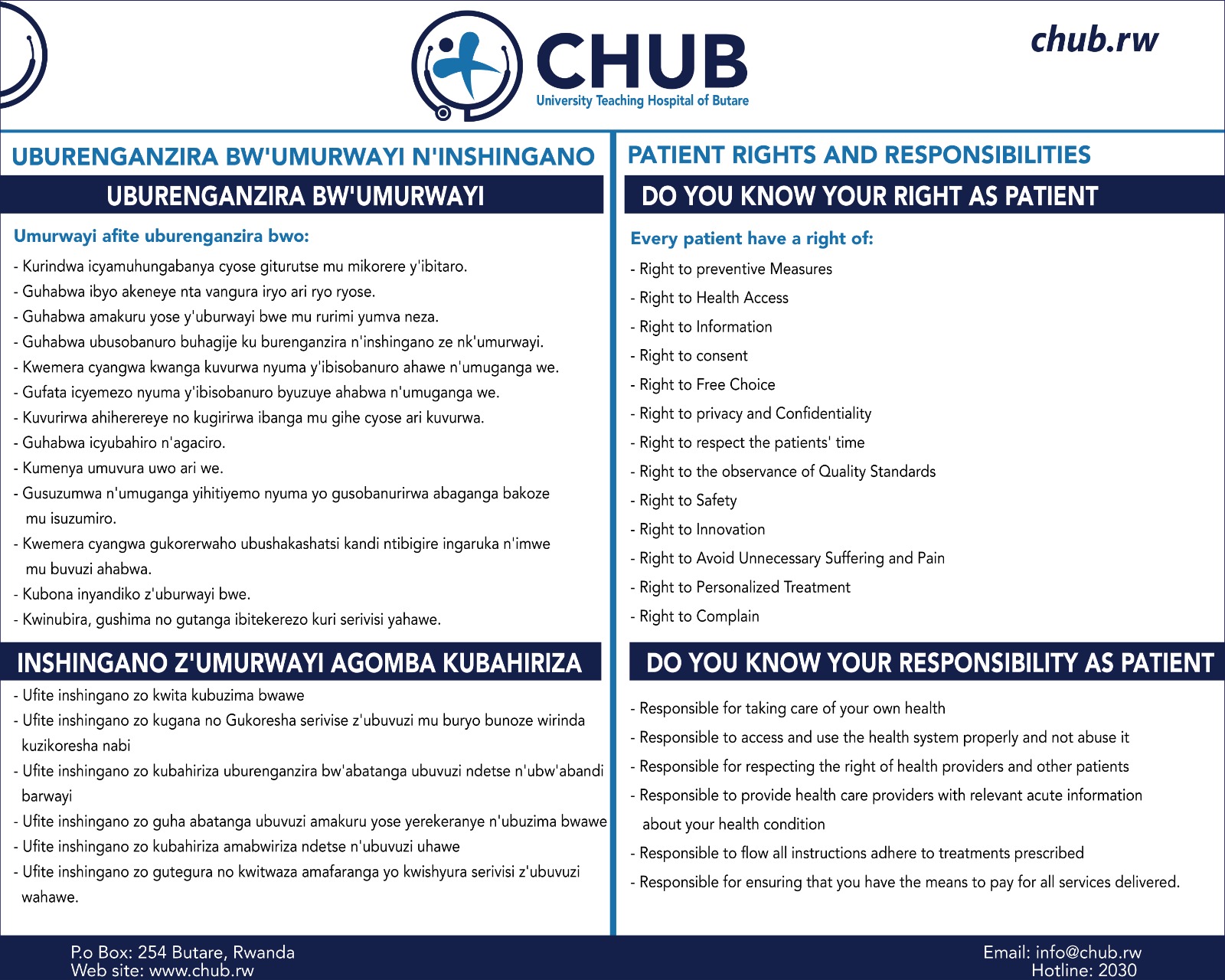
RESPONSIBILITIES OF THE PATIENT
As a patient you have following responsibilities:
- To take care of own health and respect the rights of other patients and health care providers.
- To utilize the health care system properly, to care for and protect the hospital environment.
- To provide health care providers with relevant and accurate information for diagnostic, treatment, rehabilitation or counseling purposes and advise them on own wishes with regard to end of life care.
- To comply with the prescribed treatment or rehabilitation procedures.
- To enquire about the related costs of treatment and/or rehabilitation and to arrange for payment.
- CHILDREN’S RIGHTS DURING HEALTHCARE AT CHUB
Beside the general patients ‘rights, every child and young person under the age of 18 years has a right to:
The consideration of their best interests as the primary concern of all involved in their care
Make sure that all healthcare provided are in line with the greatest physical, intellectual, psychological and cultural benefits of the children while taking into consideration of any risks and costs to this.
To express their views and to be heard and taken seriously
Give due weight to children’s opinion in accordance with the competence of child through trust, loyal information and sound-guidance and give attention to the expression (cry, gestures, verbal, arts, etc.) of the child toward the healthcare to be provided and try to improve their experience of this healthcare
To highest attainable standard of healthcare
Healthcare provided in a child-friendly environment, by professional knowledgeable in children’s health with a particular emphasize on their culture while aiming quality and safe service with up-to-date specific equipment and standard protocols and policies (best care possible).
- To respect for themselves as a whole person, as well as respect for their family and the family’s individual characteristics, beliefs, culture and contexts
No discrimination of any kind is acceptable: ethnicity, race, gender, economic status, religion, age, sexual orientation, colour, appearance, illness, disability, language or culture.
- To be nurtured by their parents and family, and to have family relationships supported by the service in which the child or young person is receiving healthcare
Right to be cared by the parents/family and let them involved in the care, respect their opinion and allow staying with their children and accompanying them during procedures where applicable.
- To information, in a form that is understandable to them
Children should be deserve the right to get right information on their illness and care to the level of their capacity to understand it.
- To participate in decision-making and, as appropriate to their capabilities, to make decision of their care
Children are entitled to a second opinion in their care. Therefore, they are provided with understandable information, given opportunity to ask questions that are to be answered in order to allow them participating with their parents/guardians in the decision on their care (informed consent).
- To be kept safe from all forms of harm
- Protect children from any source of physical or psychological harm; protect them from unnecessary pain during procedures, investigations and treatment; protect from abuse, physical or psychological violence and upsetting experiences during their care. If neglect or family violence is observed or suspected, the healthcare provider should intervene to stop it and/or report it to through established channels.
- To have their privacy respected
- Personal information, identity and bodily privacy in children do also matter. Examinations, bathing and care should be conducted with privacy in a presence of a parent/guardian and picture or records should be handled with same privacy as for adults.
- To participate in education, play, creative activities and recreation, even if this is difficult due to their illness or disability
- Encourage keeping regular and routine activities during their healthcare to minimize anxiety and keep their development and learning. Protected time for playing and appropriate stuff should be availed as much as possible.
- To continuity of healthcare, including well-planned care that takes them beyond the paediatric context
Ensure a well-coordinated continuity of care for children between the healthcare providers, the family and other services working with the children in different geographical location they move across in order to guarantee this continuity of care.